
General Summary
Welcome to my first ever article on this website! Surely not what you'd expect; its not what I had planned either. I decided to begin with a general topic that would be informative because I wasn't really sure on which dinosaur to start on. Now that I've finished it, it feels like it should be in the general science section but oh well. The good news is that during my research, I wrote an entire list of tributes I want to make! But first, let's get this first topic over with!
This article is packed with dinosaur fun facts, their history of discovery and the science behind some of the greatest specimens that the paleontological record has to offer to this date.
Soft Tissue Preservation
A fundamental requirement of the scientific process is the acknowledgement of limitations. Every scientist is well aware of it, and although sometimes it can be a source of frustration, it is also a call for inquery. In the world of paleontology, paleoartists are not shy about trying to close these gaps in knowledge with creativity and logic. But in an academic setting, it is difficult to propose such conclusions so lightly. Comparative anatomy has provided a steady source of reference for interpretation of certain anatomical structures and their use. Furthermore, fundamental biological principles can help us to identify unexpected findings, which can truly highlight the magical sensation of wonder that this science never fails to produce.
Some clues, however, are not visible at first glance. A fossil is more than just a rock with the shape of a bone. It's an exact replica of every nook and cranny of it. And it's not just growth lines, muscle imprints, and evidence of scars. It's also the replica of molecular details. Most of our information about extinct life only comes through fossil bone. Because of it, some tend to underestimate how much information we can get out of it. But for professionals and passionate amateurs alike, a bone may as well be a history book of an animals entire life.
The aim of this article is to explore soft tissue preservation in fossils. It's a rare occurance, that does say a lot about a dinosaur. But it, too, holds hidden clues that are the key for a full picture of the Mesozoic fauna. We will learn about how these clues are created, in hopes of noticing an exploitable pattern. Some famous examples will aid us to do so. And I also hope to share my personal reflections on the subject.
Fundamentals
We begin this journey with a quick summary of rudimentary concepts needed to understand the fossilization of soft tissue. There are a lot of resources out there [1, 2] that explain what fossilization is in a straightforward manner. My focus is on the essential conditions required for the process to occur. It is imperative to understand these in order to comprehend why soft-tissue preservation is so remarkable. Fossilization can only happen under the following conditions:
- Rapid burial of organic material, to protect remains from deformation and external agents. This includes scavengers, physical disturbances (e.g., a large animal trampling the remains) or encrustration by other organisms. While burial does not completely shelter the material from deformation, it will increase the chances of fossilization quite significantly
- An alkaline chemical environment within the sediment. This helps shield the remains from water, which can introduce and sustain bacterial activity.
- If any microorganisms, fungi or plant roots do indeed infiltrate the bone, low temperatures can slow down their activity or completely halt their interactions.
- The presence of mineralized groundwater, which enables permineralization. As the water evaporates, the leftover minerals can populate the rest of the space available. This adds to the rigidity of bone, letting it last longer.
- The presence of minerals like copper, manganese and iron is required to start the fossilization process, where these minerals will slowly replace the integrity of the bone as it decays, eventually turning it into rock. These can have many sources depending on the site in which the animal died.
If most of these requirements are met, then bone can turn into rock, and fossil vertebrates can form. Given that they survive millions of years of geological processes, that is. In a sentence, the existance of a fossil is based on pure luck. That is to say, it depends on a lot of factors that are out of our control. Moreover, even if all the conditions were met, it is most likely that the fossil formed is a recreation of bone only. This is because it takes more time for bone to decay than any other part of the body.
So, we are at the mercy of "Mother nature". And you'll be surprised to know that she has been quite generous. Let's examine some examples of fossilization. They will show us how these processes come into play, how they can vary, and why it matters for the formation of soft tissue.
Microraptor gui (IVPP V12330 and BMNHC PH881)
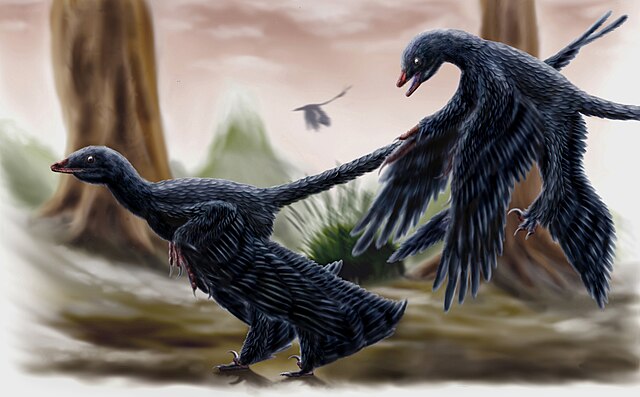
The dromaeosaurids need no introduction. They are a family of long snouted, relatively big headed dinosaurs with serrated teeth and forward-facing eyes. Their best known members include Velociraptor, Deinonychus, and of course, Microraptor.
Microraptor is a genus of dromaeosaurid dinosaur that encompasses three distinct species, although it's been debated whether they are three variations of the same species. It lived during the early Cretaceous period, around 125 to 120 million years ago. There are many rough estimates for its height and length (orbiting between 77cm-80cm in length and 94cm-99cm in wingspan) and it weighed approximately 1.88 kg . Due to the variety of fossil specimens described, which is around 300, Microraptor is considered to be one of the most abundant life forms for its time. And abundance of life means an abundance of death, which leads to more carcasses, higher chances of fossilization, and the possibility of finding something special.
Microraptor is known as an exceptional example of soft-tissue preservation. This includes feathers, coloring, and gut contents primarily. The original holotype specimen was described by paleontologists Xu Xing, Zhou and Wang in December of 2000. This holotype preserved clear feathering all around the body, including apparent wings on the hindlimbs.
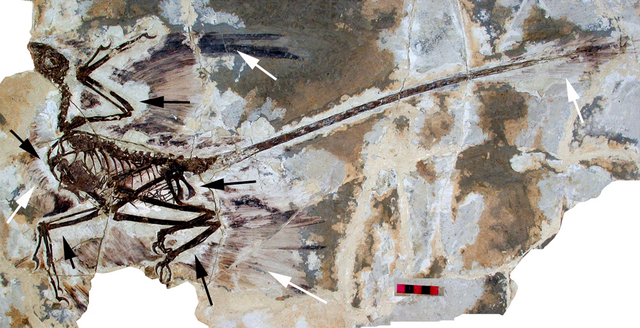
So, the question arises. How did we get such a fascinating fossil?
The holotype of Microraptor (IVPP V12330) was found in the Jiufotang formation, in Liaoning, China. This is a geological formation specially favored by paleontologists because of its phenomenal fossil history, consistently providing an exquisite plethora of remains. This includes birds, a wide variety of pterosaurs, turtles, mammals, fish and foliage [12]. It was a prehistoric swamp, set around 120 million years ago (early Cretaceous period). And to our particular interest, it presents a notable layer of volcanic ash.
It works similarly to sediment, in fact. When a particularly violent volcanic eruption occurs, tephra (rock fragments ejected during volcanic eruption) flies through tens of thousands of feet up into the atmosphere. The smallest particles, volcanic ash, are dispersed through great distances and settle miles away from the eruption. These deposits can accumulate rapidly, providing one of our necessary conditions for fossilization; rapid burial of organic material. It is no small particularity how fragile these deposits can be as well, as they can be reworked and transported by small gushes of wind, like any other sediment.
The carcass of IVPP V12330 was most likely subjected to a thick layer of volcanic ash, protecting it against the elements and bioturbations, as described above. It is mostly made out of something known as volcanic glass, which contains silica, a mineral that allows the process of permineralization. That is how the bone itself was preserved.
But what about the feathers? They are classified as another type of preservation known as carbonization. The feathers were subjected to immense pressure and increasing heat from the debris or other probable agents. This was a catalist that set off the processes required to release volatile chemical compounds. These compounds left behind a thin film of carbon in the shape of the original material.

The details of this kind of preservation are so intricate that it even replicates the nanostructures that make up the feather itself.
At the time, the exact colors present in Microraptor were unknown. Although the holotype revealed Microraptor's fluffiness, its colour was still a mystery. The nanostractures preserved were the key to uncover the truth.
In 2012, a study was published with the title of “A New Reconstruction of Microraptor and the Evolution of Iridescent Plumage.” by Quanguo Li, et al. This study was a description of the specimen BMNHC PH881, alongside an analysis under UV light. The study revealed the color-producing nanostructures in the specimen that hinted at the presence of iridescent coloring. How is that possible?
Well, bird feathers contain colors created through coherent scattering of light by highly organized nanostructures known to two common biological materials: keratin and melanin. The iridescence of feathers are produced by nanoscale arrays of melanin-containing organelles called melansomes. As we know, alkaline soil is part of the fundamental conditions of soft tissue preservation. And alonsgide the perminalization caused by silica, when volcanic ash comes into contact with alkaline soil it forms a 3D imprint of the nanostractures of melanosomes.
To identify the structure of melansomes, the team behind this paper took five more samples of different birds. They compared the structures with brown, brown-black, grey, plain black and iridescent melansomes. With the help of a Scanning Electron Microscope (SEM), they were able to identify the structures of BMNHC PH881. It closely resembled the feathering color in the wings of Amazonetta brasiliensis, the Brazilian Duck.

Against all expectations, thanks to the nearby volcanic activity, we have tangible evidence of the colors present in Microraptor gui and most likely all its derived species. It has unraveled the true natural beauty of this specimen, creating a fascinating picture of the mythical swamps in Liaoning.
The Burgess Shale
For this next section, let's take a detour! We must expand our vision from particular specimens to an entire ecosystem. Long before the dinosaurs reigned, before plants had reached land, life began in the sea. The Cambrian was a period of time when life had suddenly diversified into a million and one forms. And there's one formation that keeps its memory alive.
Click here to submerge yourself in the Cambrian sea!
The Burgess Shale is a geological formation known for its exceptional preservation of Cambrian fauna. It is about 506 million years old, positioning it during the middle cambrian epochs. It is composed of calcerous dark mudstone, deposited at the base of a cliff on what is now the Canadian Rockies of British Columbia. Before it became the steep cliff that it is today, the entire surface of this formation was under water.
Almost all fossils recovered from the Burgess Shale posess a shimmering dark colored film. This character may remind you of the previously discussed carbonization. But the Burgess Shale is much more than that. The mode of preservation from this formation is so mesmerizing, so detailed, that it has earned its own classification. So, what kind of fossilization does it exhibit? The Burgess-Shale kind of course!
Specifically, it is defined as the conservation of two-dimensional carbonaceous compressions in marine shales. The quarry also exhibits ichnofossils and external molds, but that's besides the point. To go further into detail, let's make a thought experiment: Imagine yourself as a kind of cambrian sea creature. Any kind will do. Your body is mushy and soft, strange in many ways when compared to today's standards. You may posess some kind of calcified structure around your body, or at least you know someone who does. Upon your death your lifeless body will hit the bottom of the ocean. Moments later, while your body decays, an underwater sandstorm quickly buries you completely. The sand that surrounds you by every angle shields your body. With pressure of other piling rocks above you and the heat of the geological processes beneath you, the sand hardens. Meanwhile, as your body melts away from decay, a thin layer of stable carbon atoms are left behind with the shape of your carcass. They come from the same sand that surrounds you, as it reacts with itself, giving birth to the necessary minerals that will replace the shape of your innards. Now, you have personally experienced the process of fossilization in the Burgess Shale. Its what thousands of marine animals, algae and cynobacteria have gone through all those years ago.
The difference between this and carbonization is subtle, so make sure to pay attention! We can see that this process depends on timing, the specific minerals within the enviornment, and other external conditions that scientists are still trying to understand to this day.

But what's so special about the Cambrian fauna? Without a doubt, the information that can be interpreted from these fossils is crucial to understand the origin of life. The Burgess Shale gives us a wide variety of beautifully detailed specimens, which without such intricate impressions, we wouldn't know half of what the origin of life once was. The Cambrian explotion led to the origin of the first jawless fish, the common ancestor to all vertebrates, as well as many extinct lineages that blur the line that defines what life even is.
The Royal Ontario Museum has a website showcasing the collection from the Burgess Shale formation. It includes beautiful renderings of some of the most famous animals, high quality images, quick explanations on classification, diet, etc. and external links to learn more! It's a treasure trove to uncover the many mysteries that the Cambrian holds. I would like to take the time and talk about some of the animals I saw on the website that caught my eye, so that we can marvel at their oddity and unique preciousness together. All thanks to the process of fossilization!
Anomalocaris canadensis
Surely this must be a familiar face to some of you. Anomalocaris was a carnivorous anthropod discovered in the Burgess Shale. First found in 1892, it was a difficult specimen to classify since multiple parts of it had been discovered and described seperately. It wasn't until 1979 that experts realized that all those parts belonged to the same animal.

It was a formidable apex predator of the cambrian sea, thought to have fed on small soft-bodied anthropods and freshly moulted trilobites. It possesed a circular mouth directly facing downard surrounded by pointy thin formations. It had two front-facing appendages that have been hypothesized to be used to manipulate pray and guide it through the mouth. It was ventrally symmetrical, had a flexible tail used to turn around rapidly while hunting down a meal.
Through the years, Anomalocaris has been subject to attention and praise from the paleontology community. Some may recognize it from its famous appearances on Walking With Monsters, or the infamous Anomalocaris tribute by scorpiopede on YouTube. It is a beautiful creature that swam elegantly through the ocean and ate everything it could grasp. It belongs to an extinct group of anthropods, and it is unlike any of its descendants today.

I would venture to say that Anomalocaris is somewhat the poster child of the Cambrian period. It's the first thing that comes to my mind when I think about of it. And the amazing ROM 51211 fossil is a gorgeous display of its body plan, adaptations and lifestyle. One of my favorite invertebrates of all time, if you haven't noticed already.
Nectocaris pteryx
Nectocaris is not odd. It was a close relative of molluscs, a part of something paleontologists call a "stem-group". This means that, although there are no living relatives of Nectocaris today, its most closely related to clams, octopuses, calamari, oysters and snails. Overall, it's body plan is simple to understand. It was a fairly small predator and scavenger, reaching only 77 milimeters in length. The thing that stood out to me initially was the funnel laying under the base of the head. It's feeding habits have been hypothized to be similar to octopuses today, grasping its pray with a strong grip using its tenticles. It would've certainly been interesting to watch this creature consume small trilobites and other fauna!

The existance of Nectocaris has lead to the theory that early Cephalopods did not need a bouyant shell to start swimming. Nectocaris was a fairly active animal, swimming constantly but keeping close to the bottom of the sea. Its primary mode of propulation were the fins at both sides of its body, swirling around in a hypnotizing motion. It may have also squirted water from its funnel. It may have also been used to oxyganate its large interal gills, inhaling and exhaling water into its inner cavities.

Odaraia alata
This peculiar looking creature has a dubious clasification. It has been historically described as a crustacean, a study by Budd (2002 and 2008)[27,28]. For now, Odaraia is considered an extinct genus of anthropods, composed of the single species Odaraia alata. With a maximum size of 150 milimeters, it was a carnivorous animal that swam through the ocean during the middle cambrian. Its large, tubular carapace makes it a member of the Hymenocarina order[25]. This order also pocesses the first bulks for a mandible, making them remarkable members of the history of life.

Odaraia represents one of the many forms that this kind of body armor can take. It enclosed its ventral appendages, making it impossible for the animal to walk on the ocean floor. Therefore, it is most likely that it swam for the most part of its life. Due to its dorsal hinge, it thought that it swam on its back, in the same way that the modern horseshoe crab does. Its large eyes indicated that it was an active predator, consuming its pray as they were brought into its carapace by the current. This mode of feeding is commonly known as a suspension feeder.
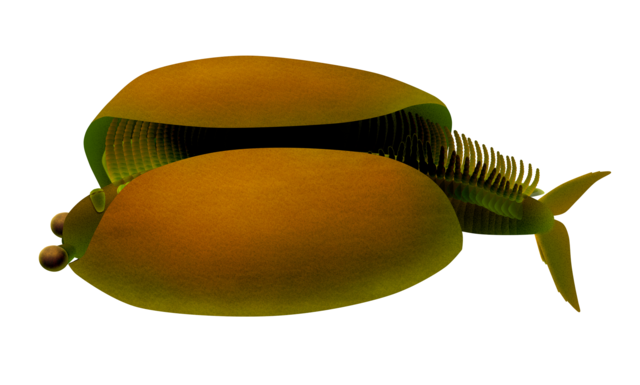
It had a highly segmented body, making it flexible despite its large enclosure. There are no members of Hymenocarina left, but it was greatly diverse during its time. The thought of an ocean filled with these colorful swimming fortresses would be the center piece of any prehistoric aquarium.
Carnarvonia venosa
Our last Burgess Shale specimen for today, Carnarvonia was another member of Hymenocarina. Sadly, this is a fairly obscure taxon, having little to no studies available apart from the holotype description. Despite that, I wanted to mention this animal to appreciate the gorgeous preservation on its carapace. Found in 1912, the vains and muscle scars clearly visible on the holotype suggested that it could possible open and close its carapace from the middle line.

The lack of information on this creature has caused many questions to emerge. Its an incomplete specimen, as it lacks most of the body that should go along after the carapace. It's eyes are not even preserved, unlike all previous examples, and only eye sockets are divisible upon closer inspection. It has been debated whether if it is a crustacean after all, or what it's feeding habits were. Nevertheless, it is an excellent example of Burgess Shale preservation, taking into account that not only it has preserved part of the animal soft-tissue body, but it has gone into further detail with the venacular system clearly visible in its surface.
With that, we conclude our voyage through the prehistoric cambrian sea. This is only the surface (not literally), as a large amount of plants, cynobacteria and other animals are also part of this extensive collection of fossils. The preservation of Burgess Shale fossils is certainly an entertaining topic to explore, with its many mysteries and conditions. There may be many other speacies that have been discovered already, so keep an eye on the news!
Borealopelta markmitchelli
Alright, let's zoom back into single animals. This is where things will begin to get even more exciting! The next mode of preservation in our list is unexpected, although if the name above sounded familiar you might be aware of what I'm about to discuss. Whenever I tell my friends about this and the many other specimens like this one, they are usually left speechless! And why wouldn't they be? Based on what we know about the fundamentals of preservation, we are keenly aware that fossils are just rock. They are an exact replica of what the animal was, based on what we learned about Microraptor gui...but they are still made up entirely of minerals of rock.
When a fossil forms, it can be suseptable squishing and stretching. This is because, through millions of years, geological processes twist and turn the ground below us. This can cause deformations in most fossils, which can make things difficult when examinating a specimen. We also rely on these processes to re-expose the fossils themselves. So it's a double-edged sword in the end.
But like everything else in nature, there is an exception.
Borealopelta markmitchelli is a nodosaurid ankylosaur from the lower cretaceous, around 110 million years ago. It was a herbivour that spent its days walking around the beach of the Wester Interior Seaway, eating ferns on humid summer afternoons. With its five meter long body and weighing around 1500 kg, its size and armor protected it from most predators. Like the nodosaurid it once was, Borealipelta markmitchelli had an elongated skull, bumpy knobs at the top of it, and most astonishingly, a clubless-tail. Although there are members of ankylosauridae (the sister taxa to nodosaurids, where the original Ankylosaurus is categorized) who do not possess a tail club [30], nodosaurids are specially known for this.
The back of Borealopelta was covered in osteoderms, which are bony plates embedded on the skin of the dinosaur. They were mainly for protection from bigger predators, like Acrocanthosaurus. A miner from the Suncor Millenium Mine in Alberta, Canada, was surprised to find one of those osteoderms popping out of the side of a 12 meter dig site. He called a team of paleontologists from the Royal Tyrell museum to help him uncover and take out this dinosaur. When the team got it out of the ground, they identified it was not only as a new species of nodosaurid, but also as one of the best preserved fossils in history (at the time).

The holotype of Borealopelta markmitchelli, the only specimen found, named TMP 2011.033.0001, was a dinosaur mummy. It had preserved the entire head, neck and forelimbs. It also had some parts of the feet, and half of the back with its osteoderms. When brought back to the museum, it was prepared by the hero technician Mark Mitchell. His hard labor took almost six years to complete, and he is now part of the species name in honor of his great work. He and the rest of the team at the Tyrell Royal Museum, as well as the Suncor miners who helped bring it to the lab, are the collaborators who's story is told in "Dinosaur Cold Case".
So, once again we ask ourselves, how did this even come to be? If fossils are just rocks, then how is it possible to find a dinosaur mummy in the first place? Let's take a closer look.
The holotype of Borealopelta is, still, made up of rock. But unlike other fossils, it is not just a replica of a dead animal. When Borealopelta died, it turned into a natural mummy. This is a process that can be found still today, known also as desiccation or drying. It is similar to the process of an Egyptian mummy, although this happened entirely by chance. The mummy itself was buried underwater and then petrified, giving us the specimen before us today.
Borealopelta was not just a collection of bones and osteoderms, it had also preserved a whole lot of soft tissue. It had feet pads, stomach contents, skin from underneath the armor, everything! You can personally check out the entire specimen in this fossil tour made by National Geographic. You will notice that its stomach contents themselves were identified as ferns, which grew close to the shore. It is thanks to these that we know that Borealopelta died during a summer storm at the shore. It was dragged in by the violent waves of the Wester Interior Seaway, where Borealopelta struggled for who knows how long to stay alive. Due to its heavy armor, it wasn't a good swimmer, and it drowned some time after being carried away. A few hours after dying, its body began to bloat with gases, as it should during decay. Its stomach expanded, its boyance turned it upside down. When the inner gases escaped, he sank to the seabed. The impact of its heavily armored body lifted the sand beneath it, burying it underneath 15 cm of sand.
This is were things get a little weird at first glance. The sand, as the original study concluded, did not possess any sedimentary characteristics. However, it was rich in siderite, which began to harden, creating a solid concretion that isolated the carcass from the water. This created the necessary conditions for it to mummify and fossilize, as it was in a partially oxiganted environment.
As if it weren't enough, as a mummy itself, it is still a one of a kind. Borealopelta shows little to no compressions, thanks to the siderite concretion it was protected by. The skin that was found in it also didn't seem to shrink, as you would expect for a mummy. This means that the fossil is an exact clone of what the animal would've looked like while it was still alive. This is a one in a million chance, earning it its title as one of the best preserved fossils out there.

The skin had preserved melansomes, which are extensively analyzed in the holotype's description. They give invaluable insights on the predator-pray dynamics of the early cretaceous. As if its boney armor was not enough, Borealopelta exhibits a color pattern of a light underbelly and a brown-redish top. This is a specific kind of camouflage, made to take advantage of shadows, to make the animal look monotone in its surroundings. The study itself does a really good job to explain why this is important, so please take the time to read the original paper for more information.
That is the story of Borealopelta. It is a fascinating tale. You'd expect that there's nothing better than this, right? An animal found exactly as it was during life, something that paleontologists could've only dreamed of a few decades ago. But we still have two more animals to discuss. And I don't want to sound like a clickbait YouTube title but I am sure that the last one on the list will blow your mind.
Edmontosaurus mummies
This is an oldie, but a goodie. Firstly, Edmontosaurus was a Hadrosaurid ornithopod dinosaur from the late Cretaceous period, which was around 73 to 66 million years ago. It was one of the last non-avian dinosaurs to ever exist before the mass extinction. It was exceptionally large, with the largest species E. annectens measuring up to 15 meters in length (49 ft) and 15.9 metric tons of weight. It had a large beak that was provably used to crop out plants. Its mouth had internal tooth rows close to the cheeks that may have been constantly replaced through its life time. They are also considered evidence for chewing habits, as established by the Natural History Museum [41]. There are two officially identified species of Edmontosaurus, known as E. regalis and E. annectens.

The story of Edmontosaurus as a genus is a complicated ordeal. The holotype for the genus was found in 1892, identified as Claosaurus annectens. However, this was the first of many misclassifications from this lineage, and since the holotype was found, there have been many re-definitions, evaluations, etc. Edmontosaurus mummies had appeared earlier than one would expect. The oldest Edmontosaurus mummy I coul find was that of AMNH 5060, described in 1911 by Fairfield Osborne in the Journal of the American Museum of Natural History [39]. It was described as Thachodon annectenis, although now we are sure it's actually an Edmontosaurus species, specifically Edmontosaurus annectens. The description for AMNH 5060, or "Dakota", said that this specimen was proof of the aquatic habits of hadrosauridae, due to what seemed to be interdigital webbing on the perfectly perserved foot. Now we know that such webbing was actually foot pads, which have been found in many other Edmontosaurus mummies. Although it may sound rediculous now, this idea was actually accepted up until 1964. That's 43 years! Could you imagine a hypothesis to be considered true for that long simply because of a particular interpretion? It happens more often than you'd think!

AMNH preserves a kind of fossilization that isn't very similar to the previously described Borealopelta. Instead of the bloat and float narrative from before, the original descriptors identified the remains as a mummy created on land. A study in 2025 [43] actually confirms this hypothesis while exhaminating another mummy, NDGS 2000. The consensus follows a four-step desiccation process that includes normal procedure of decompososition and drying. Burial under anorexic conditions should follow, which aids the preservation of a barely scavanged carcass. This hypothesis derives from the fact that this Edmontosaurus mummy had some of its internal organs, which is something that scavengers go after first due to their high nutrition value.
On the other hand, the specimen NDGS 2000 shows various signs of predation and deccation that challenge the hypothesis of mummy formation at the time. Through CT scanning, the team of the 2022 description of NDGS 2000 (found in 2011) was able to discover evidence of tooth marks from crocodyloforms and other possible medium size carnivores. This, again, suggest the absence of rapid burial. However, it's kind of unexpected, right? By now, a reader would assume that rapid burial is extremly important for exquisite preservation. Almost like its impossible for it to happen otherwise. We have seen countless examples as to why this is the case. However, NDGS 2000 and many other mummies tell a different story.

But how could rapid burial occur if the carcass shows signs of predation from scavengers other than microorganisms? Well, the authors from this theory propose that it was because the carcass was in easy access to predators that these post-mortem wounds gave way for the gases and liquids to exit the dead bodies, advancing the deccation process and creating a natural mummy before the entire animal was consumed. This is vastly different from the original description and it is backed up by the previously studied process of natural mummies that can be found of modern day animals. The abscence of internal organs in this specimen also adds to the theory. Furthermore, the enviornment in which NDGS 2000 lived and died was a humid jungle climate, which had a low sedimentation rate. This prolonged the tim in which the carcass was exposed to the sun, while also making fossilization plausible, although unlikely.
Finally, the authors decided to analyze other studies and address the observed differences between them. If rapid burial does not a mummy make, then what does?
Why was it crucial for Borealopelta to be buried quickly but not for Edmontosaurus?. According to Drumheller S. K., et al, there are three main pathways in which this can occur:
- Dessiccation and deflation
- Rapid Burial
- Aqueous anoxia
Want to know what these three specific pathways entails? Click the arrow!
Desiccation and deflation: Remains are exposed in a terrestrial setting for a long period of time. The body walls become compromised through the activities of predators, scavengers and decomposers including small bodied invertebrates. The ensuing openings provide a pathwhay for gases and fluids associated with decomposition to escape the carcass, effectively draining it. Through this process, only dermal and skeletal tissues remain. Once initiated, the diflation and draining can continue during exposure or shallow burial. These processes result in a mummy that has a deflated appearance. Desiccation and deflamation seem to be exceedingly common pathway for dinosaurian mummies to form.
Rapid Burial: The carcass is buried during a short time period that encompases a few days per-mortem and post-mortem (its a spectrum). Encasement also limits access to oxygen, slowing down the decaying process. These types of mummies preserve in three-dimensions, potentially with internal organs intact as well as dermal tissue in place. A mummy that exhibits this type of preservation is Brachylophosaurus GPDM 115. However, there are many uncertainties still at hand, which demands further research to be constructed for this specimen.
Aqueous anoxia: This can take place during the decomposition of deposited organics that consume most of the available oxygen. Burial rate can vary during these conditons. The remains are limited under no scavenging and depressed microbial activity. Additionally, aqueous anoxia itself can promote the mineralization of soft tissues, contributing directly to the fossilization process. An example for this mode of preservation is the previously discussed Borealopelta TMP 2011.033.0001.
It's undeniable that Edmontosaurus is one of the most important genuses in Paleontology. It has been subject to a great amount of work and hypothesis, as it has continued to ellude us through the years with its majestic fossils. A 3D mummy is something that not a lot of people expect to find, let alone so many of them! This is a topic that deserves a tribute of it's own, so...perhaps stay tuned?
Tyrannosaurus rex
This 8 ton giant has been a consistant protagonist of the paleo world ever since 1993. No matter how familiar you are with the technical details of T. rex, we are all aware that it has earned its position as a poster child. Well, the lizard king has done it again, when in 2005 the paper titled "Mechanisms of Soft Tissue and Protein Preservation in Tyrannosaurus rex " [43] was published. And it is every bit as exciting as that title suggests.
This is a topic that requires some previous knowledge that I haven't touched upon yet. Although preservation can vary depending on almost every aspect of an organism's death, what every single one of them has in common is that they're all rock. What else could survive more than sixity-six thousand years of geological processes and deformation? And that's the bare minimum, considering we have already discussed Cambrian critters. This, however, is a special case. It's unique, so much that it's hard to believe its real.
So, without further ado, let's talk about fenton chemistry.
A quick look at Fenton Chemistry
Fenton Chemistry is a branch of inorganic chemistry that studies what are known as fenton reactions. Basically, a Fenton reaction occurs when ferrous iron reacts with hydrogen peroxide, which forms ferric iron and hydroxide ions, along with the hydroxyl radical (OH). In vertebrates, such as dinosaurs, fenton reactions occur when blood cells and peroxisomes (an organelle of eukaryotic cells) get damaged. [44] Evidently, this happens a lot during the process of decay. In excess, the residue of these fenton reactions can be detrimental to living animals. For this not to happen when an animal is alive, there are scavengers, such as collagen, that take care of the excess remains after a rapid chain of fenton reactions. When these scavengers come into action post mortem, it stabilizes the biomolecules shortly after death, aiding its preservation over millions of years.
This is the explanation hypothesized by the team of Schweitzer M. H. after finding real, flexible collections of blood vessels in a T. rex [43] fossil. After a great deal of analysis, they concluded that this was unaltered material of fibrollous type I collagen, a scavanger for fenton reactions found in Hemoglobin. Subsequent studies as to show how fenton chemistry aids to the preservation of soft tissue proved that there are some common perpitrators to this kind of preservation [44].
So, to summerize, the reason why this seemingly malliable piece of T. rex blood vessels preserved is because its own decomposition. It sounds hypocritical at first, I know. Let me explain.
The actual remains were found inside of the T. rex femur. The bone itself acted as an armor for the fibers from incoming groundwater and exposure. An experiment involving shrimp [45] suggested that under completely isolated, oxidyzing conditions, muscles and soft tissue could last longer than expected. Meanwhile, when the fibers themselves began to decompose, the collagen scavengers took care of the rapid chain of fenton reactions, which kept it from totally disappearing for at least 68 million years. The remaining iron that wasn't present in excess let out groups of chemicals called "radicals". These are highly reactive, and they turned into knots, linking the amino-acids that make up proteins. These proteins present in the blood vessels were then reinforced by the iron. And without these radicals, the proteins would've decayed after less than a million years, as it was commonly understood at the time.
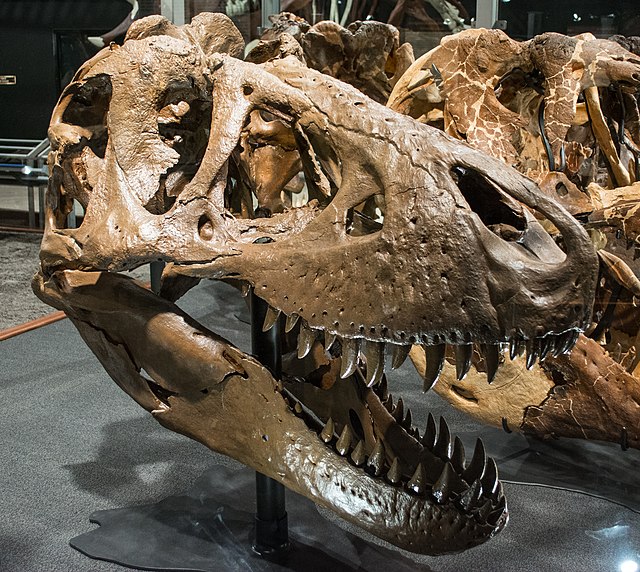
Without all the complicated science, the image itself is fascinating. Because of researchers like Dr. Schweitzer, other paleontologists started to look for this tissue in other fossils. And indeed they found some. As for the original findings themselves, an important piece of trivia is that the tissue is similar to the one seen in modern birds, further aiding the hypothesis of the phylogenetic relationships between dinosaurs and birds.
Conclusions
The answer to the question "How does Soft Tissue fossilize?" has been exposed in this text in detail. To summerize, it is as complicated as it is short, which is 'it depends'. Most of this article has been about building a basic understanding of fossilization, breaking it down and talking about exceptions to every rule. I believe that it reflects the reality of a paleontologist quite thoroughly. And, in contrast to popular belief, sometimes in science it is actually productive to create rules just to break them.
All these animals, in my opinion, deserve to be remembered. They are a window to Earth's past that is far too beautiful and enticing to ignore. From the strangest Oderaia alata to the biggest Tyrannosaurus rex and the bulkiest Borealopelta markmitchelli. They are remarkable findings that shaped our understanding of Earth and its creatures. And they push our imagination to the limit by telling us exactly how wrong we are.
Reality is chaos, and in chaos, there's beauty.
Thank you for reading.
References
[1] The fundamentals of Fossilization - The Australian Museum
[2] Modes of Preservation - Open Geology Textbook
[3] Microraptor description, specimen IVPP C1233 - Xu, X., Zhou, Z. and Wang, X. The smallest known non-avian theropod dinosaur. Nature 408, 705–708 (2000). https://doi.org/10.1038/35047056
[4] Microraptor study, specimen BMNHC PH881 Quanguo Li et al. ,Reconstruction of Microraptor and the Evolution of Iridescent Plumage. Science 335, 1215-1219 (2012). DOI:10.1126/science.1213780
[5] Perminalization, definition and others - National Park Service
[6] Volcanic ash preservation - National Park Service
[7] Volcanic ash preservation - Belviso, C., Abdolrahimi, M., Peddis, D., Gagliano, E., Sgroi, M., Lettino, A., Roccaro, P., Vagliasindi, F. G. A., Falciglia, P. P., Di Bella, G., Giustra, M. G., and Cavalcante, F. (2021). Synthesis of zeolite from volcanic ash: Characterization and application for cesium removal. Microporous and Mesoporous Materials, 319, 111045. https://doi.org/10.1016/j.micromeso.2021.111045
[8] Volcanic ash preservation - Mindat on Zeolite Group
[9] Jiufotang enviornment - Pteros
[10] Jiufotang formation - Wikipedia page
[11] Jiufotang formation taphonomy - Wu, Z. , Qiu, L. and Wang, H. (2019) A New Understanding of the Lower Cretaceous Jiufotang Formation in Western Liaoning. Open Journal of Geology, 9, 658-660. doi: 10.4236/ojg.2019.910067.
[12] Jiufotang formation taphonomy - Wu, Z. , Qiu, L. and Wang, H. (2019) A New Understanding of the Lower Cretaceous Jiufotang Formation in Western Liaoning. Open Journal of Geology, 9, 658-660. doi: 10.4236/ojg.2019.910067.
[13] Taphonomic details of the aneorobic enviornment in the sediment - Orr, P. J., Benton, M. J., and Briggs, D. E. G. (2003). Post-Cambrian closure of the deep-water slope-basin taphonomic window. Geology, 31(9), 769. https://doi.org/10.1130/g19193.1
[14] A study on the taphonomic processes of the formation - Gaines, R. R., Briggs, D. E. G., and Yuanlong, Z. (2008). Cambrian Burgess Shale–type deposits share a common mode of fossilization. Geology, 36(10), 755.
[15] Cross reference with the Spence Shale in Utah - Garson, D. E., Gaines, R. R., Droser, M. L., Liddel, W. D., & Sappenfield, A. (2012). Dynamic palaeoredox and exceptional preservation in the Cambrian Spence Shale of Utah. Lethaia, 45(2), 164–177. https://doi.org/10.1111/j.1502-3931.2011.00266.x
[16] Modes of Preservation - Wikipedia article
[17] Modes of Preservation - Opengeology textbook
[18] The Carbon Cycle Opengeology textbook
[19] YouTube video on the Carbon Cycle
[20] Anomalacaris info Burgess Shale collection of the Royal Ontario Museum
[21] Anomalacaris info Resource listed in the ROM website
[22] Anomalacaris info Smithsonian - National Museum of Natural History
[23] Nectocaris info Burgess Shale collection of the Royal Ontario Museum
[24] Oderaia alata info
[25] Oderaia alata info - wikipedia article
[26] Arthropod head problem Budd, G. E. (2002). A palaeontological solution to the arthropod head problem. Nature, 417(6886), 271–275.
[27] Head structure in stem euarthropods Budd, G. E. (2008). Head structure in upper stem‐group euarthropods. Palaeontology, 51(3), 561–573.
[28] Three-dimensional armored dinosaur preservation Brown, C. M., Henderson, D. M., Vinther, J., Fletcher, I., Sistiaga, A., Herrera, J., & Summons, R. E. (2017). An exceptionally preserved three-dimensional armored dinosaur reveals insights into coloration and Cretaceous predator-prey dynamics. Current Biology, 27(16), 2514–2521.e3.
[29] Ankylosaurian phylogeny Thompson, R. S., Parish, J. C., Maidment, S. C. R., & Barrett, P. M. (2011). Phylogeny of the ankylosaurian dinosaurs (Ornithischia: Thyreophora). Journal of Systematic Palaeontology, 10(2), 301–312.
[30] Borealopelta fossil tour National Geographic. Tour of the Borealopelta fossil (interactive feature).
[31] Dinosaur Cold Case documentary The Nature of Things. Dinosaur Cold Case: Documentary on the discovery of Borealopelta.
[32] Dinosaur at Sea PBS Eons. Dinosaur at Sea (video essay).
[33] Borealopelta overview The Canadian Encyclopedia. Borealopelta.
[34] Definition of desiccation University of California Museum of Paleontology. Definition of desiccation.
[35] Desiccation as fossilization The Virtual Petrified Wood Museum. Is desiccation a mode of preservation or fossilization?
[36] Dino Gen: Borealopelta Dino Gen. Borealopelta: One of the only mummified dinosaurs ever found.
[37] Borealopelta described as a mummy Sci.News. Borealopelta news article defining the specimen as a mummy.
[38] Original description of Edmontosaurus annectens Osborn, H. F. Original description of Edmontosaurus annectens (as Thachodon annectens). The American Museum Journal.
[39] Edmontosaurus species definitions Campione, N. E., & Evans, D. C. (2011). Cranial growth and variation in edmontosaurs (Dinosauria: Hadrosauridae): Implications for latest Cretaceous megaherbivore diversity in North America. PLoS ONE, 6(9), e25186.
[40] Edmontosaurus info card - Natural History Museum
[41] Edmontosaurus info article - National Park Service
[42] Edmontosaurus mummy study NDGS 2000 Drumheller SK, Boyd CA, Barnes BMS, Householder ML (2022) Biostratinomic alterations of an _Edmontosaurus_ “mummy” reveal a pathway for soft tissue preservation without invoking “exceptional conditions”. PLoS ONE 17(10): e0275240. https://doi.org/10.1371/journal.pone.0275240
[43] Original description ofT. rex soft tissue. Schweitzer, M. H., Wittmeyer, J. L., Horner, J. R., & Toporski, J. K. (2005). Soft-tissue vessels and cellular preservation in Tyrannosaurus rex. _Science (New York, N.Y.)_, _307_(5717), 1952–1955. https://doi.org/10.1126/science.1108397
[44] Soft Tissue In Fossil Bone by Philip J. Senter in Paleontologica electronica
[45] Shrimp experiment for Soft Tissue preservation . Briggs, D. E., & Kear, A. J. (1993). Fossilization of soft tissue in the laboratory. _Science (New York, N.Y.)_, _259_(5100), 1439–1442. https://doi.org/10.1126/science.259.5100.1439